Partnership for Food Safety Education

FightBAC!

  • Food Safety Basics
    • The Core Four Practices
    • Featured Resources
  • Food Poisoning
    • About Foodborne Illness
    • Foodborne Pathogens
    • Causes & Symptoms
    • Food Safety Glossary
  • Food Safety Education
    • National Food Safety Month
    • Safe Flour Handling
    • The Story of Your Dinner
    • Food Safety Mythbusters
    • Safe Poultry Handling
    • Prep Yourself: Delivery Food Is on the Way
    • Safe Produce
    • Recall Basics
    • Go 40 or Below
    • Safety in All Seasons
  • K-12 Education
    • Curricula & Programs
      • Grades K – 3
      • Grades 3 – 5
      • Grades 4 – 8
      • Grades 9 – 12
    • Hands On
    • Kids Games & Activities
    • School Lunches
  • Child Care
    • Babies & Toddlers
    • Child Care Training
    • Kids Games & Activities
  • Safe Recipes
    • Safe Recipe Style Guide
    • Safe Recipe Activity for Middle School
    • Cookbooks
    • Appetizers
    • Side Dishes
    • Entrees
    • Desserts
  • Free Resources
    • Recorded Webinars
    • World Food Safety Day
    • Global Handwashing Day
    • Recursos en español
    • Coronavirus Resources
    • Evaluation Toolkit
  • About Us
    • Who We Are
    • Board of Directors
    • Who Is Involved
    • PFSE Staff
    • Brand Assets
    • BAC Fighter Ambassadors
    • Job Openings
    • Contact Us
  • Get Involved
  • Events
    • Upcoming Events
    • 2025 Conference
  • News & Blogs

Search Results for: holiday safety

Five Food Safety Tips for Holiday Buffets

December 10, 2019

The holiday season reigns in terms of total grocery sales in the United States.* This abundance of food going home with people indicates a busy December of food preparation and entertaining.

The Partnership for Food Safety Education offers five key ways to keep unwanted germs away from your holiday buffet:

Keep a clean scene

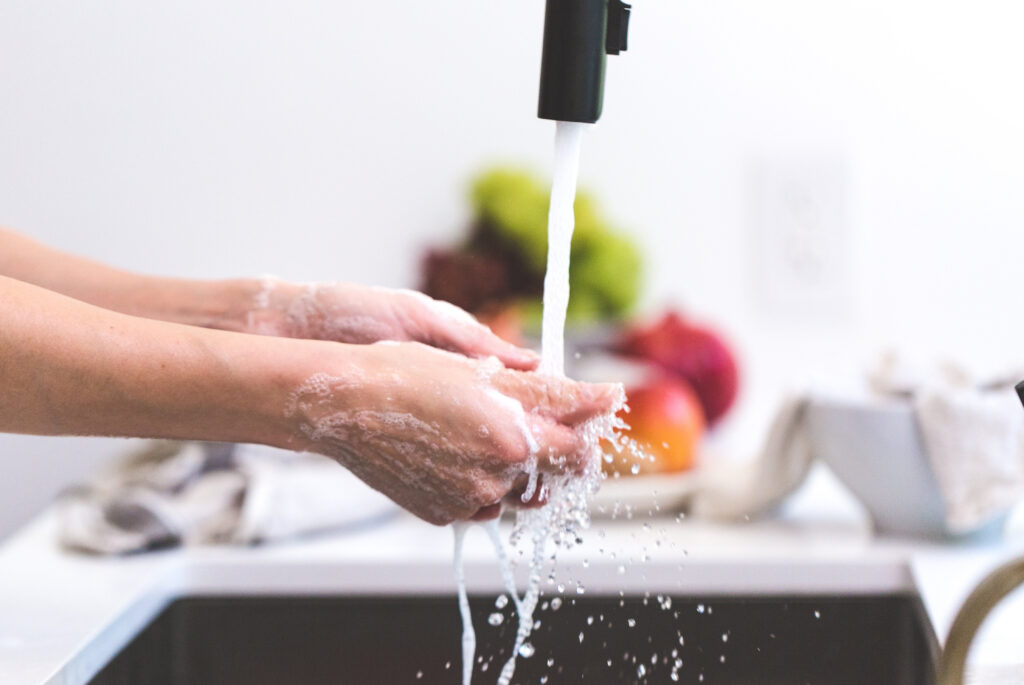
Before cooking and after handling raw ingredients such as meat, poultry, eggs and flour, wash your hands with soap and water for 20 seconds. It sounds simple but recent USDA research found that 97% of people are failing to wash their hands properly. Wash your cutting boards, dishes, utensils, and counter tops with hot soapy water after preparing each food item and before you go on to the next food. This short, animated video  shows how to “Keep a Clean Scene” at home when preparing meals.
Thaw foods safely

Thaw frozen ingredients in the refrigerator, in cold water, or in the microwave. For safety, never thaw food at room temperature!

Keep hot foods hot

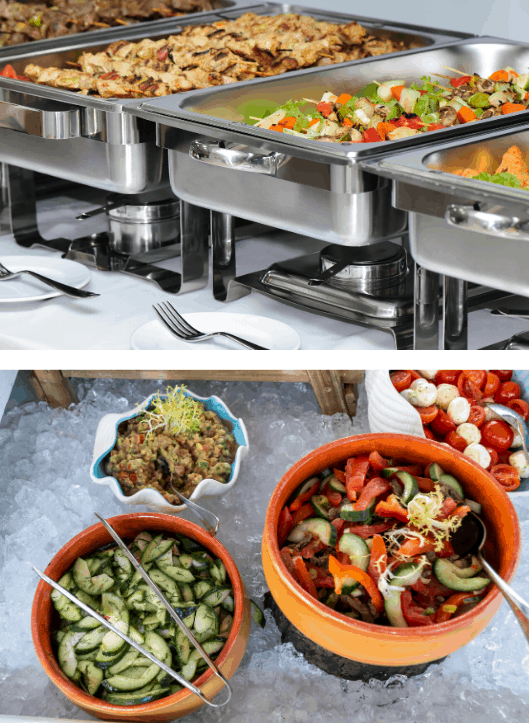
Place hot foods in chafing dishes, crock pots or warming trays at 140 °F or warmer. Bacteria can multiple rapidly between 40 °F and 140 °F. Use a food thermometer to monitor the temperature and ensure food is being held at 140 °F or higher on your buffet.

Keep cold foods cold

During your event, arrange and serve perishable foods on several small platters. Put one platter on the buffet table and store the other platters in the fridge. Swap them out every two hours. Nest platters in bowls of ice on the buffet table. 

Handle leftovers safely

Divide large portions of leftovers like beef, turkey, gravy, dressing, stews and casseroles into smaller portions in shallow containers. Refrigerate leftovers within two hours. A constant home refrigerator temp. of 40 °F or below is one of the most effective ways to reduce the risk of foodborne illness. Use an appliance thermometer to be sure your refrigerator temperature is at 40 °F or below. Eat leftovers within 3-4 days. 

To help you Fight BAC!® (harmful bacteria) this holiday season, we’ve created a flyer on parties and buffets and an infographic on frozen foods.  

Follow the Partnership for Food Safety Education on Facebook at @FightBAC and on Twitter at @FightBAC. More food safety resources are available free at StoryofYourDinner.org. 

The Story of Your Dinner campaign is supported by Cargill, Costco Wholesale and the Frozen Food Foundation. See our video in English and Spanish at StoryofYourDinner.org. 

*November and December reign in terms of total grocery sales with $52.5 billion an $52.7 billion in sales respectively according to U.S. Census Bureau data.

Shawnte Loeri is the Communications Associate with the Partnership for Food Safety Education. She can be reached at (202) 220-0705 or sloeri@fightbac.org.
Filed Under: Blog

Holiday Food Safety Quiz

The quiz is now closed. Thank you for playing!

Sweepstakes Rules 

5 Top Food Safety Tips for the Holidays and Every Day

December 13, 2016

Mike Robach, Vice President, Corporate Food Safety and Regulatory Affairs, Cargill 

Holiday parties are a staple this time of year. I’m in the midst of planning several for friends and family right now. With my job focused on preventing foodborne illnesses, I believe one of the worst things that could happen to any host is to spark an illness due to unsafe food handling techniques.

Tola Oyewole

Arming yourself with the knowledge to safely prepare your holiday spread doesn’t have to be difficult or time consuming. In fact, it’s as simple as Cyber Monday shopping—it can be done from your couch, in your pajamas. Tips for safe food handling are at your fingertips when you visit sites such as the CDC or the USDA. You can even find specifics for the food you are preparing, from the safe handling of turkey to beef to eggs.

For quick reference, here are the top five tips I remind my family of every time we are in the kitchen preparing a meal:

1.Clean hands and surfaces often—Wash all utensils and preparation surfaces, including cutting boards, with hot soapy water. Use warm water and soap for at least 20 seconds to wash hands before and after handling food.

2. Separate foods—Don’t transfer bacteria from one food to another. Keep raw meat, poultry and seafood away from other foods that won’t be cooked. Remember to re-wash all surfaces—and your hands—after handling raw foods.

3. Rinse fresh fruits and vegetables—Rub firm-skinned produce, like cucumbers and apples, under tap water. Rinse all produce before peeling, as microorganisms on the surface can be easily transferred with a peeler or knife blade. Pat dry with a paper towel.

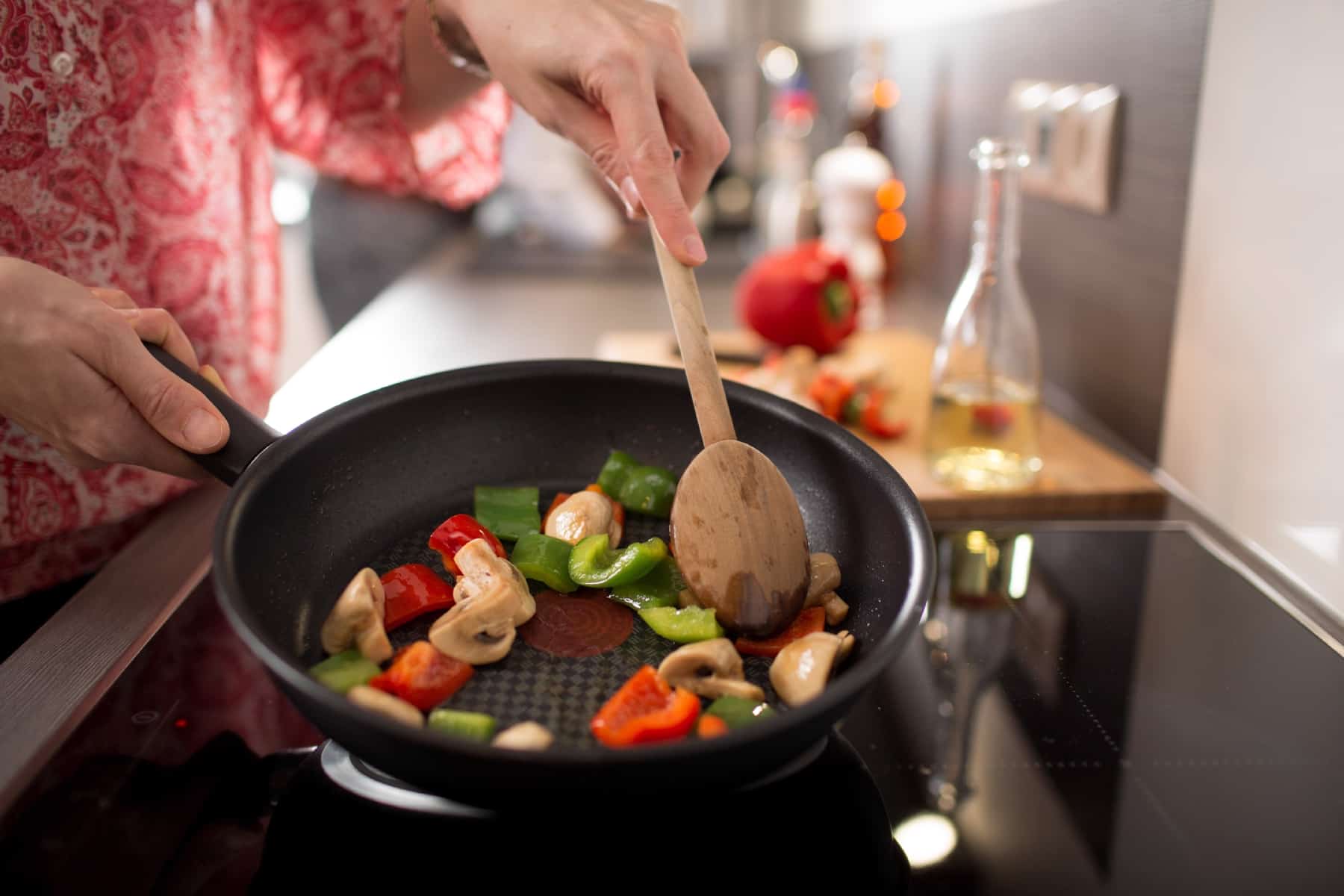
cargill-stir-frying-veg

4. Cook to safe temperatures—A host’s best friend is their thermometer. Use it consistently to ensure foods reach a temperature that kills harmful bacteria that can cause illness. The Partnership for Food Safety Education has an excellent list of safe internal temperatures.

5. Know how long leftovers can last—Refrigerate leftovers as soon as possible, in shallow containers, so they cool off more quickly. Shelf life of leftovers varies by food—but most are only good for three to four days. Use the USDA’s AskKaren service 24/7 via computer or mobile device to ask how long your specific leftover will remain fresh.

Check off this list, visit those websites and feel pride—and confidence—that your guests will leave with full stomachs and happy hearts, but not with a foodborne illness.

About the blogger

Mike Robach serves as vice president for corporate food safety, quality and regulatory affairs at Cargill. Mike has worked closely with the USDA and FDA regarding food safety policy, HACCP, and regulatory reform based on science. He has also worked with the World Organization of Animal Health (OIE) and the Food and Agriculture Organization (FAO) on harmonized animal health and food safety standards.  He is the current Chairman of the Board of the Global Food Safety Initiative (GFSI).

Save

Save

Save

Save

Save

Save

Save

Save

Save

Save

Save

Save

Save

Filed Under: Blog, Uncategorized Tagged With: Food handling, food safety, Food safety education, Food safety tips, holiday food safety tips, Poultry, preventing foodborne illnesses

Holiday Food Safety Graphics

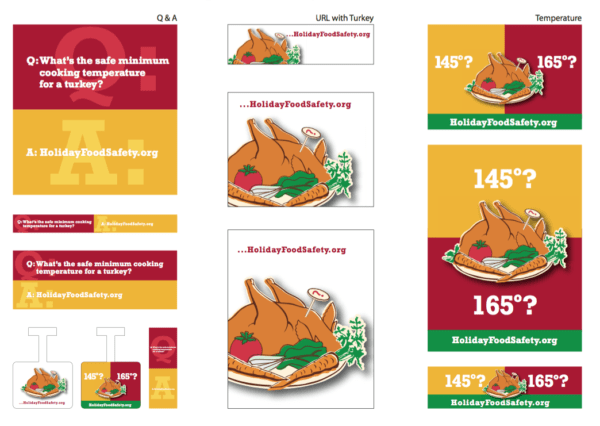
Holiday Food Safety Point of Sale Turkey Graphics

Point of Sale Turkey Graphics

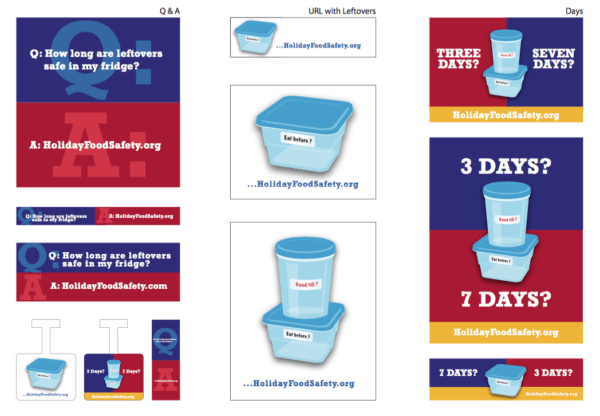
Point of Sale Leftovers Graphics

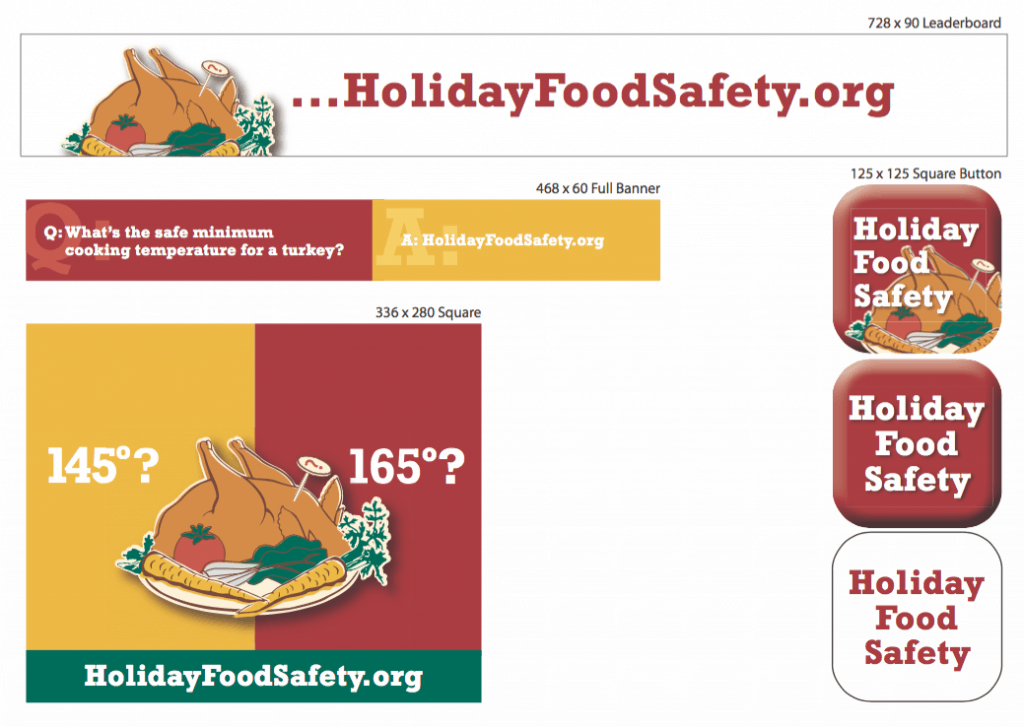
Holiday Food Safety Web Graphics

Holiday Food Safety Web Graphics 

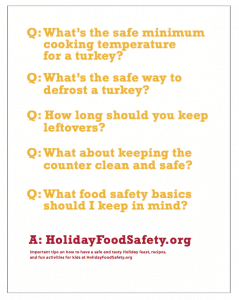
Turkey Questions Graphic

Turkey Questions Graphic

Holiday Food Safety Print Ad Questions Graphic

Questions Graphic

Holiday Food Safety Graphics Print Ad

Questions Graphic Print

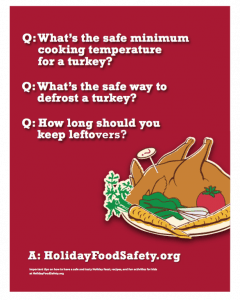
Holiday Food Safety Half Page Ad

Half Page Ad

Spring Forward with Food Safety

March 26, 2024

Many of this season’s celebrations involve perishable foods like eggs, beef, ham and lamb. These foods need to be handled properly at home to prevent food poisoning.

Safe Egg Handling

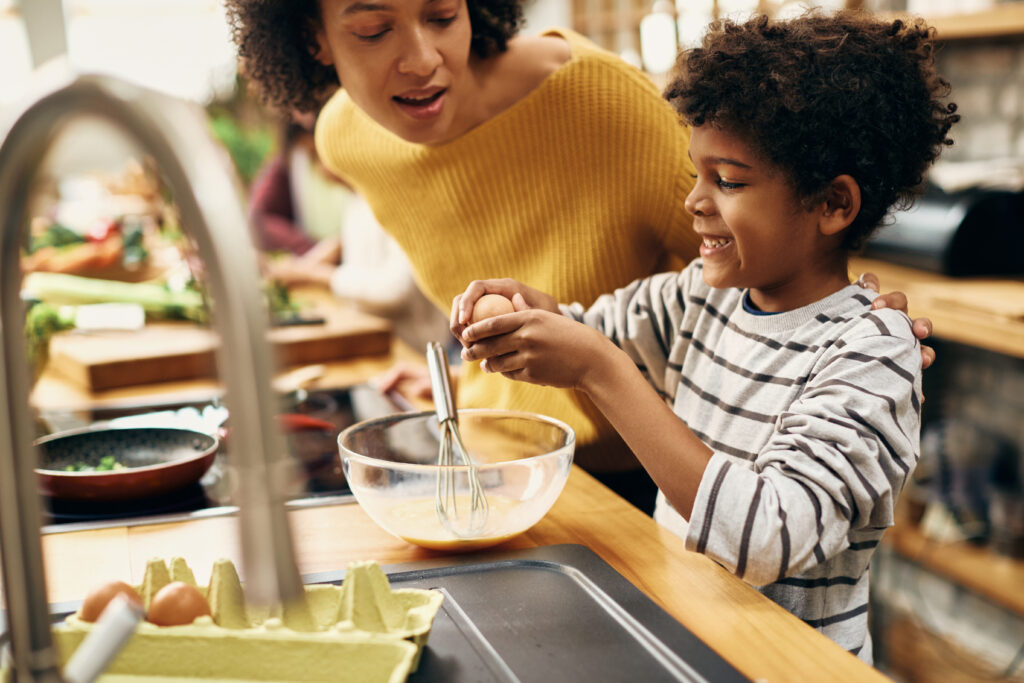
Eggs are a big part of many spring celebrations and activities. Kids love to decorate and dye them, hide them, and cook them with their families in festive foods.

Follow these eggs-pert food safety tips with kids and families to keep them safe this spring season:

  • Wash hands with soap and water before preparing food and after handling raw eggs.
  • Prevent cross-contamination. Wash cutting boards, counters, utensils, and serving plates after touching raw eggs, meat, poultry, and seafood.
  • Remember the two-hour rule. Don’t leave eggs out at room temperature for more than two hours.
  • Cook eggs and dishes containing eggs until the internal temperature reaches 160° F on a food thermometer.
  • For egg hunts and other activities, only use eggs that have been refrigerated. Discard eggs that are cracked, dirty, or have been out at room temperature for more than 2 hours.


Get more safe egg handling advice to keep you and your young ones healthy this season.

Handle & Cook Meats Safely

The meat is the centerpiece of any holiday meal. Make sure yours is a showstopper by handling and cooking it safely:

  • Wash hands with soap and water before preparing food and after handling raw meat and poultry.
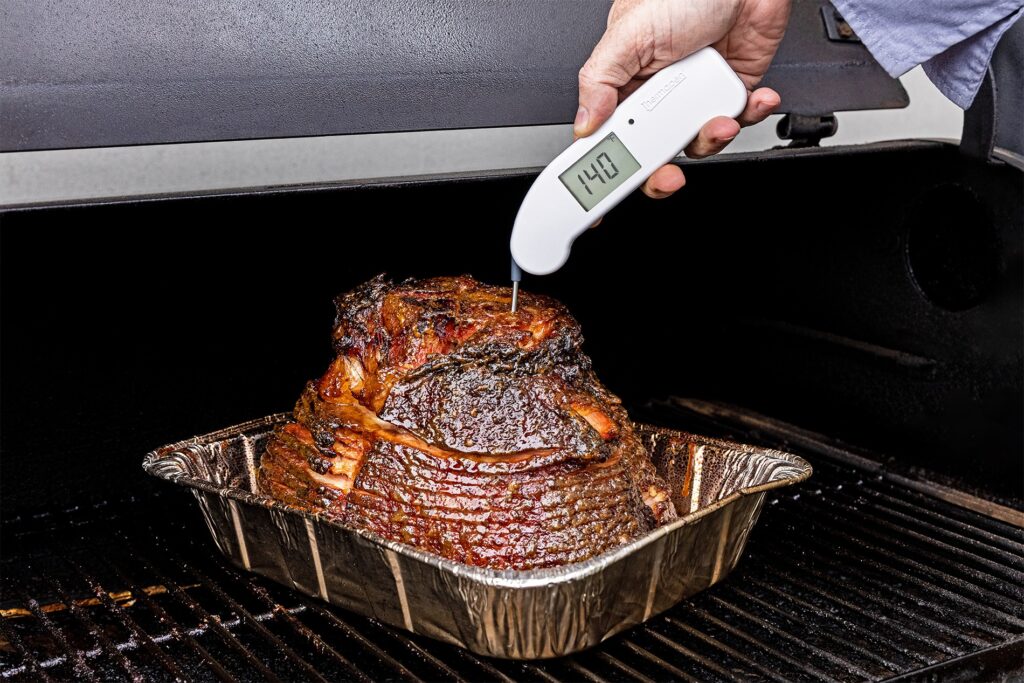
  • Cook ham until the internal temperature of 145 °F on a food thermometer with a three-minute “rest time” after removal from the heat source.
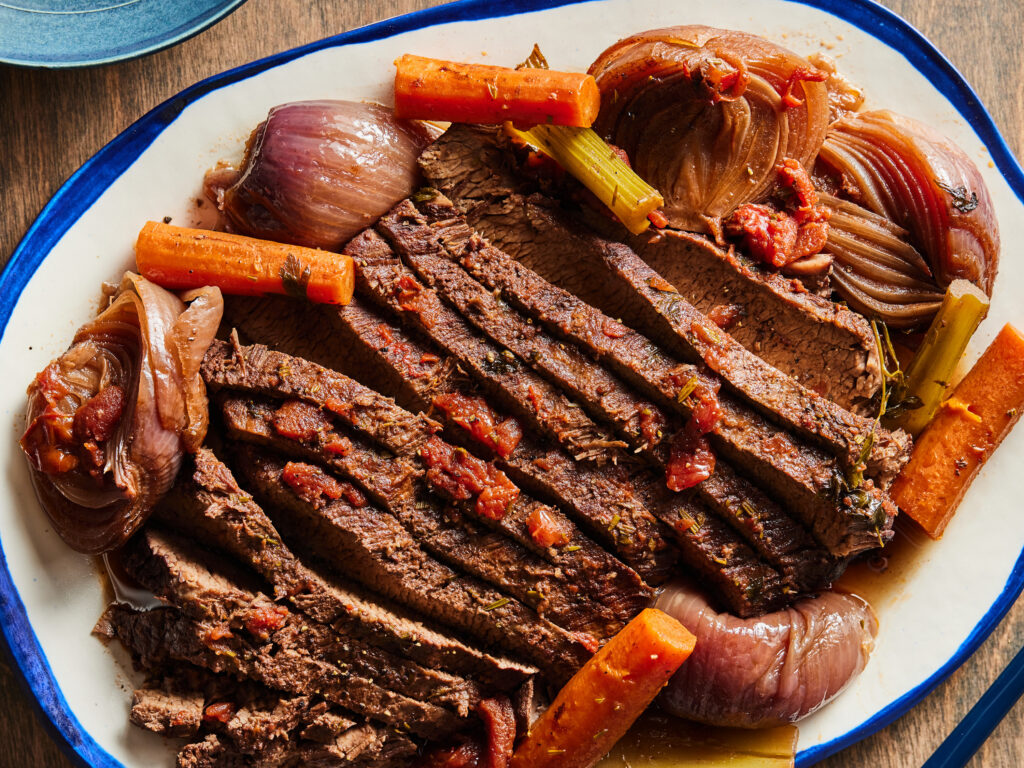
  • Bake beef brisket, fat side up in a baking dish, in an oven set no lower than 325 °F. The brisket is safe to eat when it reaches an internal temperature of 145 °F on a food thermometer with a three-minute “rest time” after removal from the heat source.
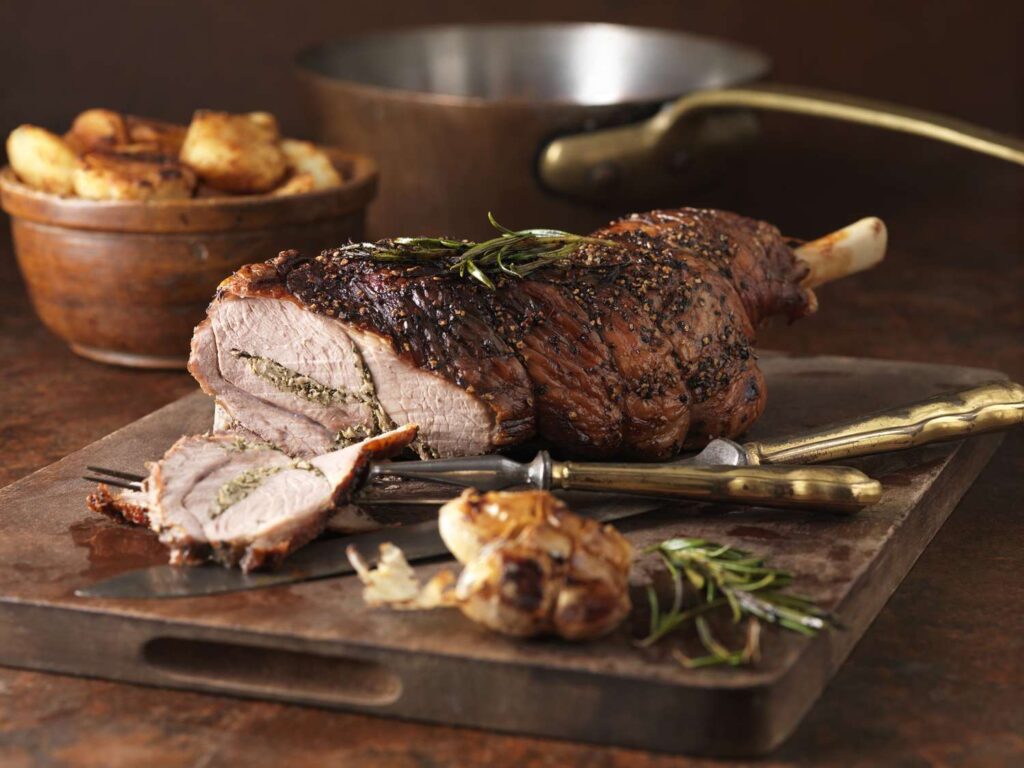
  • Cook all raw lamb steaks, chops, and roasts to a minimum internal temperature of 145 °F on a food thermometer with a three-minute “rest time” after removal from the heat source.


Spring Clean Your Way to a Safer Kitchen

It’s important to know the difference between cleaning and sanitizing. They aren’t the same thing. Both are important to help prevent the spread of harmful germs.

  • Cleaning removes germs, dirt, and impurities from surfaces or objects. Cleaning works by using soap (or detergent) and water to physically remove germs from surfaces. This process does not necessarily kill germs, but by removing them, it lowers their numbers and the risk of spreading infection.
  • Sanitizing lowers the number of germs on surfaces or objects. This process works by disinfecting surfaces or objects using a diluted liquid chlorine bleach solution (combine 1 tablespoon liquid chlorine bleach with 1 gallon of water in a clean bucket).


Learn more about when to clean and when to sanitize at home.

Follow these food safety tips to help your family and friends have an egg-cellent spring celebration!

Filed Under: Blog Tagged With: BAC Fighter, children, Easter, Easter eggs, Easter food safety, Easter ham, Easter meal, Fight BAC, Food handling, food safety, Food safety education, Food safety resources, foodborne illness, prevent foodborne illness, spring, spring celebration, Spring celebrations, spring food safety

  • 1
  • 2
  • 3
  • …
  • 9
  • Next Page »

Copyright © 2025 · Partnership for Food Safety Education

Facebook X-twitter Pinterest Linkedin Instagram Youtube Youtube Envelope
Privacy Policy | Terms and Conditions | Disclaimer