Partnership for Food Safety Education

FightBAC!

  • Food Safety Basics
    • Four Food Safety Practices
    • Featured Resources
  • Food Poisoning
    • About Foodborne Illness
    • Foodborne Pathogens
    • Causes & Symptoms
    • Food Safety Glossary
  • Food Safety Education
    • National Food Safety Month
    • Safe Flour Handling
    • The Story of Your Dinner
    • Food Safety Mythbusters
    • Safe Poultry Handling
    • Prep Yourself: Delivery Food Is on the Way
    • Safe Produce
    • Recall Basics
    • Go 40 or Below
    • Quick Guide to Cooking Temperatures
    • Safety in All Seasons
  • K-12 Education
    • Curricula & Programs
      • Grades K – 3
      • Grades 3 – 5
      • Grades 4 – 8
      • Grades 9 – 12
    • Hands On
    • Kids Games & Activities
    • School Lunches
  • Child Care
    • Babies & Toddlers
    • Child Care Training
    • Kids Games & Activities
  • Safe Recipes
    • Safe Recipe Style Guide
    • Safe Recipe Activity for Middle School
    • Cookbooks
    • Appetizers
    • Side Dishes
    • Entrees
    • Desserts
  • Free Resources
    • Recorded Webinars
    • World Food Safety Day
    • Global Handwashing Day
    • Recursos en español
    • Coronavirus Resources
    • Evaluation Toolkit
  • About Us
    • Who We Are
    • Board of Directors
    • Who Is Involved
    • PFSE Staff
    • Brand Assets
    • BAC Fighter Ambassadors
    • Job Openings
    • Contact Us
  • Get Involved
  • Events
    • Upcoming Events
    • 2025 Conference
    • CFSEC 2026
  • News & Blogs

Search Results for: handwashing

Global Handwashing Day

October 15 is Global Handwashing Day! 

Washing your hands is one of the most effective ways to prevent the spread of germs. 

Studies have shown that handwashing can prevent 1 in 3 diarrhea-related sicknesses and 1 in 5 respiratory infections.

Learn how to properly wash your hands with soap and water, and show others how to practice good hand hygiene.

Participate
Mythbusters
Graphics
Food Delivery
Downloads
For Kids

Participate in Global Handwashing Day

For Global Handwashing Day on Thursday, October 15, let’s commit to promoting proper handwashing and hand hygiene! Here are some ways you can participate:

  • Use the Global Handwashing Day toolkit to get started! 
  • Use these sample social media posts along with the graphics on this page and the hashtags #GlobalHandwashingDay and #foodsafety.
  • Share the videos (see above) that encourage proper handwashing and food safety steps.
  • Share the handwashing coloring placemat and the handwashing coloring page on social media with the hashtags #GlobalHandwashingDay and #foodsafety.
  • Watch the replay of the webinar Clean Hands, Healthy Home! which highlighted observational research on consumer handwashing, and how handwashing awareness and the recent shifts in handwashing behavior. CEUs are available! 

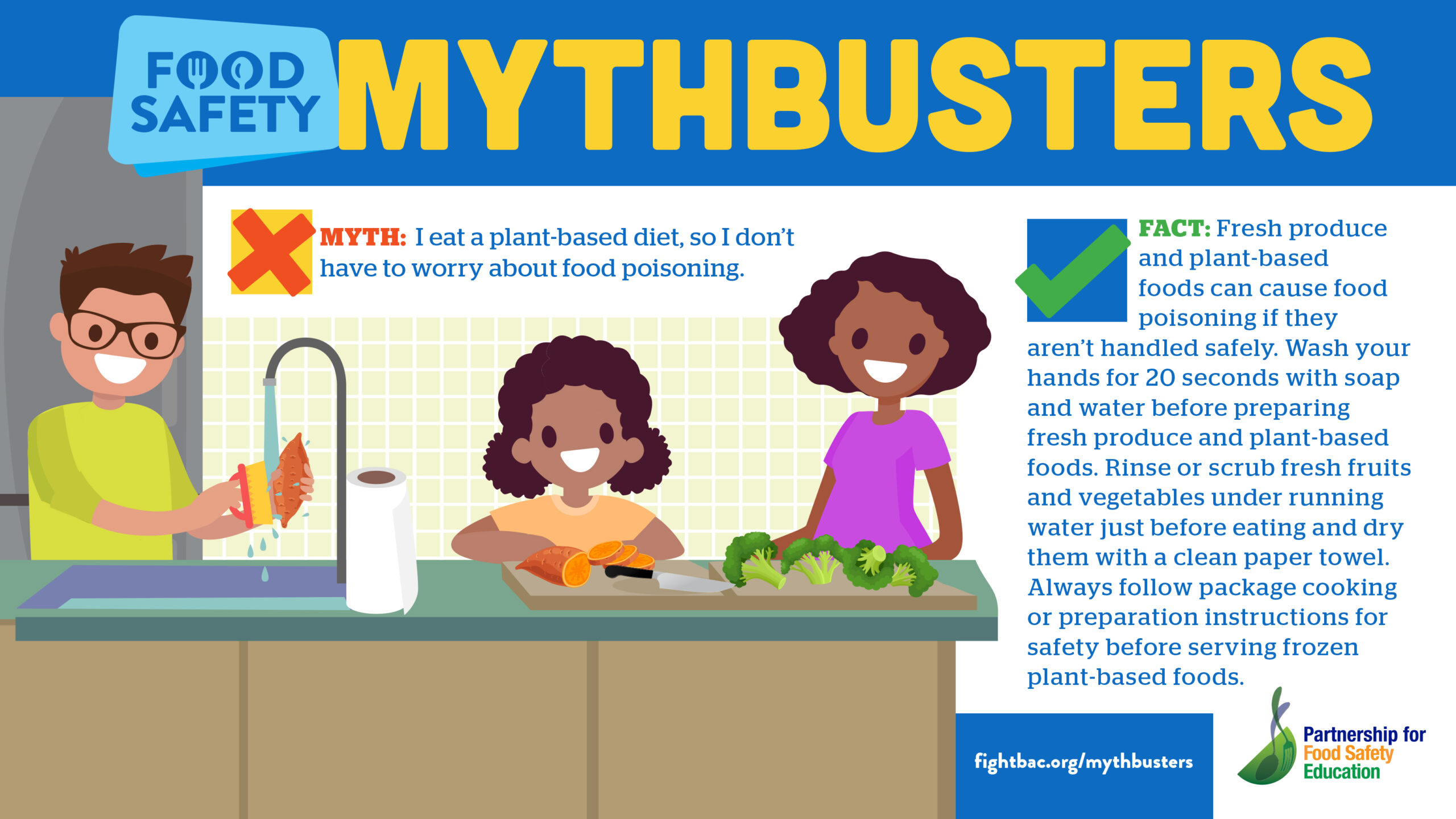
Handwashing Mythbusters

Common food safety myths originate from the misapplication of science, family tradition, or misinformation on social media.

The Partnership created these social media graphics for consumers and educators to help debunk common home food safety myths.

Brush up on safe food handling steps with these food safety Mythbusters!

English | Español

English | Español

English | Español

Clean Hands, Healthy Home!

Just in time for Global Handwashing Day, health, nutrition and food safety educators are invited to download and share these resources on social media and in your outreach.

The infographic (right) is available as a JPG file and printable PDF file.

These colorful social graphics teach families how to properly wash hands while preparing food and handling raw meat, flour and eggs.

Use these sample social media posts along with the graphics on this page. Let’s help educate families on proper hand hygiene!

Teach Kids Proper Handwashing

Food Delivery

Know your role! As the way we receive food changes, the core food safety practices remain essential to protecting our health and the health of those we love. 

Washing your hands is one of the most effective ways to prevent the spread of germs. Wash your hands with clean, running water and soap for at least 20 seconds before and after handling food. If soap and water aren’t available, use an alcohol-based hand sanitizer that contains at least 60% alcohol.

Learn more about the three simple steps you need to follow to keep your delivered food safe!

Free Downloads

Food safety starts at home! Check out these free resources to help keep families healthy while preparing food at home.

The Core Four Practices

Coloring Pages for Kids

Safe Poultry Handling

The Story of Your Dinner

Kids Activities

These kid-friendly activities will help teach young ones how to properly wash their hands, as well as other food safety steps to help keep them healthy!

Scrub Club

Food Safety Activity Sheets

Coloring Placemats

Games & Recipes

Handwashing Tips

Washing your hands is one of the most effective ways to prevent the spread of germs. Studies have shown that handwashing can prevent 1 in 3 diarrhea-related sicknesses and 1 in 5 respiratory infections.

Follow the CDC’s five steps for effective handwashing.

  1. Wet your hands with clean, running water (warm or cold), turn off the tap, and apply soap.
  2. Lather your hands by rubbing them together with the soap. Lather the backs of your hands, between your fingers, and under your nails.
  3. Scrub your hands for at least 20 seconds. Need a timer? Hum the “Happy Birthday” song from beginning to end twice.
  4. Rinse your hands well under clean, running water.
  5. Dry your hands using a clean towel or air dry them.

If soap and water aren’t available, you can use an alcohol-based hand sanitizer that contains at least 60% alcohol.

For more information visit www.cdc.gov/handwashing.

Additional Resources

Global Handwashing Day was founded by the Global Handwashing Partnership, and is an opportunity to design, test, and replicate creative ways to encourage people to wash their hands with soap at critical times. Global Handwashing Day is celebrated every year on October 15.

Handwashing for Ordinary People in a Time of Novel Coronavirus

March 11, 2020

Have you been hearing in the news, at school and at work that there are important things you need to do to stay healthy?

BTW, the coronavirus handwashing advice you’ve been hearing about has always been recommended for your healthy daily life!

That’s right, these handwashing basics should be a part of your daily life and your family and friends too!  Here’s the Handwashing How!

How should I wash my hands?

Check it out — there are 5 easy steps.

  1. Wet your hands with warm running water and apply soap.
  2. Rub your hands together to make a lather and scrub them well. Be sure to scrub the backs of your hands, between your fingers and under your nails.
  3. Continue rubbing hands for at least 20 seconds, about the time it takes to sing the “Happy Birthday” song twice.
  4. Rinse your hands well under running water.
  5. Dry your hands using a clean cloth or paper towel.

This video from the U.S. Centers for Disease Control and Prevention (CDC) gives you all the basics.  Share this video with everyone you know.

So now you know how.

When should I wash my hands to protect myself and others from the risk of harmful germs?

Well, there are many times throughout the day, including:

  • Before eating food
  • Before, during and after preparing food
  • Before and after treating a cut or wound
  • Before and after caring for someone who is sick
  • After changing diapers or cleaning up a child who has used the toilet
  • After handling uncooked eggs or raw meat, poultry or seafood (or their juices)
  • After blowing your nose, coughing or sneezing
  • After touching an animal or animal waste
  • After touching garbage
  • After using the toilet or assisting another with doing so

Also, consider that your smartphone or tablet could be a source of contamination.  If you use your device in the kitchen while preparing food, you should wash your hands after holding or touching the device.

What should I use to wash my hands?

Research shows that “plain” soap is just as good as any other soap.  Using soap and water is the best option.

If running water is not available for handwashing, then use a hand sanitizer as a back-up. Your hand sanitizer product should be at least 60% alcohol content in order to be effective.

Finally, it is important to take time to help young children wash hands properly.

I know, I know. You’re thinking: I can’t keep up with all the times during the day my child should wash his or her hands.

Still, take time to model proper handwashing.  The research about the benefits of regular handwashing says it all. Modeling proper handwashing sets kids up for a healthy life!

Download a free poster or this Happy Hands song placemat to remind your kids of the 5 steps to proper handwashing!

Happy Handwashing!

Shelley Feist is the Executive Director with the Partnership for Food Safety Education. She can be reached at (202) 220-0651 or sfeist@fightbac.org. Connect: LinkedIn | Twitter

Filed Under: Blog Tagged With: contamination, coronavirus, covid-19, hand hygiene, hands, Handwashing, novel coronavirus, sanitizer, soap, wash

New Podcast: Consumer Education as a Food Safety Essential with Dr. Mindy Brashears and Carmen Rottenberg

September 29, 2026

Consumer Education is a Food Safety Essential


In recognition of National Food Safety Month, Food Safety Magazine’s editorial director and co-host of the Food Safety Matters podcast, Adrienne Blume, talks with the U.S. Department of Agriculture’s (USDA’s) Under Secretary for Food Safety, Dr. Mindy Brashears, and Carmen Rottenberg, Managing Director of Groundswell Strategy and Board Member for the Partnership for Food Safety Education, about how we can help consumers put food safety knowledge into practice.

“44 percent of people are cooking more at home than they were just a year ago… I think knowing that people are cooking more at home makes it even more important that we're getting the messaging to them, the science-based education to the consumer.”

Carmen Rottenberg

They discuss the importance of clear, consistent, science-based messaging, how trusted partners can reach consumers where they are, and the challenges of addressing misinformation in an increasingly crowded information environment. They also explore the reason “the why” behind food safety recommendations matters, and how food safety professionals can help turn awareness into lasting behavior change.

“Our job is to take the best available food safety science and make it useful for the consumer. We don't expect our consumers to be food scientists. We need to translate that to the consumers so that they can prepare a safe meal and keep their families safe from foodborne illnesses.”

Dr. Mindy Brashears
Listen in Now!

(Read the Full Transcript Below)

Read the Transcript

[Stacy Atchison]
Hello, everyone, and welcome to Food Safety Matters, the podcast for food safety professionals. I’m Stacy Atchison, publisher of Food Safety Magazine, and I want to thank you for joining us for this special bonus episode. Today, in recognition of National Food Safety Education Month, Food Safety Magazine’s editorial director and co-host of the podcast, Adrienne Blume, talks with Dr. Mindy Brashears and Carmen Rottenberg about how we can help consumers put food safety knowledge into practice. They discuss the importance of clear, consistent, science-based messaging, how trusted partners can reach consumers where they are, and the challenges of addressing misinformation in an increasingly crowded information environment. They also explore why the why behind food safety recommendations matters, and how food safety professionals can help turn awareness into lasting behavior change. But first, allow me to share a little bit about our guests.

Dr. Mindy Brashears is the U.S. Department of Agriculture’s Undersecretary for Food Safety. She previously served as Undersecretary for Food Safety from 2020 to 2021, and Deputy Undersecretary in 2019. Dr. Brashears returns to USDA from Texas Tech University, where she was a Paul Whitfield Horn Distinguished Professor of Food Safety and Public Health, and the Roth and Letch Family Endowed Chair of Food Safety and the Director of the International Center for Food Industry Excellence. Dr. Brashears’ research program has advanced food safety in meat and poultry production with a focus on public health. Her work evaluated interpretations in pre- and post-harvest environments and antimicrobial drug resistance in animal feeding systems. She has led international research teams across the globe to enhance food safety, security, and sustainable agriculture systems.

Her research has resulted in more than 20 patents and patents pending for innovations in food safety. Beyond academia, Dr. Brashears has held leadership roles on boards and advisory committees, including the American Meat Science Association, the Development Council, the International Stockmen’s Education Foundation, and the Protein Pact. She was a founding member of the Safe Think Tank and has chaired the National Alliance for Food Safety and Security and the USDA’s Multi-State Research Group. Her contributions have earned national and international recognition, including induction into the Meat Industry Hall of Fame, fellow status in the American Meat Science Association, and the National Academy of Inventors and numerous awards from leading associations.

Carmen Rottenberg is a leader in food safety and agriculture policy, serving as managing director of Groundswell Strategy and a board member for the Partnership for Food Safety Education. Prior to launching Groundswell Strategy, Carmen served as administrator of USDA’s Food Safety and Inspection Service.

Over her 13 years with USDA, Carmen held several leadership roles and was credited with spearheading key agency initiatives, including modernizing food safety inspection systems and establishing and updating pathogen performance standards. Carmen has extensive experience achieving collaboration across federal, state, and municipal agencies, including with FDA, OSHA, and with state departments of agriculture and across USDA’s 29 agencies and offices. Carmen began her federal career in the Federal Trade Commission’s Office of General Counsel and has experience working in both the public and private sectors. She holds a bachelor’s degree in political science and philosophy from Hope College and a JD from American University’s Washington College of Law. Okay, let’s get to their discussion.

[Adrienne Blume]
Well, September is National Food Safety Education Month, and in this special bonus episode of Food Safety Matters, we’re taking a closer look at the importance of consumer food safety education and the role that consumers and federal agencies, and specifically USDA, play in preventing foodborne illness. Dr. Brashears and Carmen, thank you both for joining us today.

[Dr. Mindy Brashears]
Thank you for having us.

[Carmen Rottenberg]
Yes, thank you so much, Adrienne.

[Adrienne]
Absolutely. Now, to start broadly, why is consumer food safety education such an important component of foodborne illness prevention, and particularly when so many other safeguards are already built into food production, processing, inspection, and regulations?

[Mindy]
Well, I can take that one to begin with, and you’re absolutely right. Food safety, we have a lot of procedures in place from production and processing in our inspectors or in plants every day at FSIS, and we do have the safest food supply in the world. However, food safety is a shared responsibility with our consumers, and that really goes all the way from farm to table.

Whenever consumers bring their food products home, they have a choice in how to handle it, and that’s how they store it, how they prepare it, what they do with it after they cook it. All of those things are important parts of the food safety system. We need to empower our consumers to understand how to handle those products, what to do with those products, because not all of our harmful bacteria, well, none of our harmful bacteria can be seen, and you never know what’s lurking behind the surface.

Obviously, we have raw products and cooked products, and those are treated differently, but even with our cooked products, like with listeria, some of our spore-forming bacteria, after you cook it, it can regrow, so you still have to empower the consumer to understand how to handle it and follow our clean, separate, cook, and chill concepts.

[Carmen]
And I would say, too, Adrienne, that the recent data from the U.S. Grocery Shopper Trends Report says that 44% of people are cooking more at home than they were just a year ago, and so that underscores, to Mindy’s point about what the consumers are doing when they get that food in their home. I think knowing that people are cooking more at home makes it even more important that we’re getting the messaging to them, the science-based education to the consumer.

[Adrienne]
Yeah, absolutely. Consumer education, you know, absolutely, such an important part, and, you know, as you mentioned, Dr. Brashears, there’s different products, different consumer considerations for how to prepare them, how to cook them, so, you know, we want to make sure we’re getting that message out to consumers so that they can take home this food and prepare it as it should be in their home kitchens. Now, Dr. Brashears, as Undersecretary for Food Safety, how do you view USDA’s role in educating consumers about safe food handling, and, you know, what does effective consumer food safety education look like from the agency’s perspective?

[Mindy]
That’s a great question, and I really want to echo something that Carmen touched on, and our job is to take the best available food safety science and make it useful for the consumer. We don’t expect our consumers to be food scientists. We need to translate that to the consumers so that they can prepare a safe meal and keep their families safe from foodborne illnesses. So, they also need to understand why. We have to put a little bit of emphasis on that. If you just tell someone to do it, and they might learn how, but if they don’t understand why they’re doing it and that they could have a risk of illness, then that’s also important.

But again, I’ll go back to our clean, separate, cook, and chill, because those are simple messages, but they’re all very informed by science. So just to briefly hit on those, first, we want to clean. We want to have handwashing. We want to have our surfaces clean, our utensils clean, all of those different things. Second, in separate, we want to prevent cross-contamination. Don’t let your raw products touch your cooked products. Make sure you clean that up, and that’s not just with surfaces. That’s with utensils, with even washcloths, and those types of things. Cooking, very, very important. We use a food thermometer, get to those temperatures. Again, science informs those temperatures, and we know that that kills bacteria. So use a food thermometer. And then ultimately, once you cook the product, chill it, put it in the fridge, and we always say keep hot foods hot, cold foods cold.

So those are very important concepts. And then our partnerships with our other agencies, with other educational opportunities, whether it be universities or our Partnership for Food Safety Education, those are so important. We don’t expect everyone to pull up a federal website or USDA website. We know our partnerships with these other entities play an important role in getting that message out.

[Adrienne]
Yeah, I think what you said about connecting the how or the what of food safety to the why is so important. We often talk about that as being an integral part of building a food safety culture at a food business, but it’s also part of consumer food safety culture, right? What do you do in the home? But more importantly, why do you do that? To keep you and your family healthy. So those messages definitely are important, and thank USDA for getting them out there.

So, we often talk about food safety as a shared responsibility across the farm to fork continuum. So where does the consumer fit into that chain of prevention? And how can government and industry and organizations like the Partnership for Food Safety Education better support consumers in carrying out their part?

[Carmen]
So maybe here I’ll talk a little bit about the origins of the Partnership for Food Safety Education, Adrienne, and the Partnership for Food Safety Education, which is really a collaboration between the federal government, between USDA, FDA, and the Centers for Disease Control, and industry, and consumer groups coming together. And it originally started in the late 90s after a significant outbreak. And there was a lot of fear. There was a lot of consumer fear at that time, particularly around ground beef.

And the Partnership came together, this industry and federal government collaboration with academia and consumer groups came together to sign a Memorandum of Understanding to really address the concerns that the consumer had in a way that wasn’t meant to be scary, but was meant to inform the consumer. And Mindy has gone through what originally came out of that, which was the Fight BAC campaign, which is the clean, separate, cook and chill messaging that Mindy just went through. And that remains today, right? So these are not scary messages. They’re sort of common sense principles that you can have in your home for how to handle and prepare food.

Ultimately, the consumer is coming to food preparation with their own ideas, with their own learnings and their own upbringing and their own preferences for how they want to consume the food. And so, the best thing that we can do as the Partnership, and I think federal agencies, is to advise consumers on the best possible practices. And then, of course, consumers are going to make choices about what they do.

So to Mindy’s point about the education, the Partnership for Food Safety Education has 13,000 educators around the country, many of whom are in rural and at-risk communities. These are public health professionals and dieticians and clinicians, people who are serving consumers in these sorts of wellness practices. And so, the partnership is getting messaging out that way. The federal government gets messaging out through its channels. The hope is that these messages do reach consumers where they are and where they’re getting information from.

[Adrienne]
That’s impressive, 13,000 educators. I wasn’t aware of that number.

[Carmen]
Yeah, it’s a lot, and a lot of cooperative extension, which, of course, USDA through the land-grant universities has the Cooperative Extension Network. And USDA and the Partnership rely really heavily on those extension workers who are very trusted in their communities. And I think Mindy talked about that in her response, too. We need messaging, reliable messaging from trusted partners. And that’s what the Educator Network really is about.

[Mindy]
Well, and what’s great about the Partnership is that they help the messaging to be consistent, no matter what the agency is, what the entity is, spreading the message. And I think that that’s what’s been so effective about it. And what I really appreciate about having a coordinated response that brings everyone together for consumer education.

[Adrienne]
Mm-hmm, Mm-hmm. Absolutely.

So now, Carmen, you’ve worked across the public and private sectors, including leading USDA FSIS, and you now serve on the Partnership for Food Safety Education’s board. So, from those different vantage points, what have you learned about the respective roles of government, industry, and nonprofit organizations in advancing consumer food safety education?

[Carmen]
Well, it’s a great question, and maybe I’ll break it down into the different parts. So, it’s incumbent on industry to produce safe food, and they’re doing that for consumers every single day. Mindy said we have the safest food supply in the world, and that’s because of the commitment of industry to producing that safest food in the world. The government sets standards, verifies compliance with the standards, the Food Safety Inspection Service inspectors are in plants every day. And of course, FDA has a huge inspection force around the world to make sure that our food is safe here.

But the safety of food doesn’t just stop at the production site, right? The food is ending up in our homes, and there are steps for, particularly for raw foods that you need to take as a consumer to ensure safety in the home. And there’s also personal steps. Mindy talked about the need for hand washing and the need for chilling food after you’ve consumed it. And so these are steps that are incumbent on the consumer. So industry, you know, when we look at what role industry, government, and consumers play in this sort of continuum, industry is putting the safe handling instructions on packaging, right? The government is ensuring that those instructions are on there and are setting the regulations for what needs to be communicated to consumers. And then consumers need to have that last piece of abiding by that or by ensuring that they’re following the clean, separate, cook, chill steps in their own kitchens in order to produce the safe food in their homes.

[Adrienne]
And now the Partnership for Food Safety Education’s Fight BAC campaign has been communicating those core behaviors of clean, separate, cook, and chill for nearly three decades. Yet according to the International Food Information Council’s 2026 Food and Health Survey, only 65% of Americans are familiar with those core four messages. So I guess, you know, given that data, what are some of the biggest challenges in translating established science-based food safety recommendations into behaviors that consumers will consistently practice at home?

[Carmen]
So, I think it depends on how you ask Americans the question about the clean, separate, cook, and chill messaging. I think consumers know much of this, but we really need it to become second nature in the home, right? If you ask someone, should you wash your hands before you prepare a meal for yourself in your family, I think most consumers would say yes to that. What we see in actual research that USDA has conducted is that many times consumers aren’t washing their hands before they’re doing meal preparation, or they’re not washing their hands for long enough, right? They’re washing their hands for what they’ve been taught, but it’s not long enough to actually kill harmful pathogens. And so that’s a challenge.

Consumers have personal preferences that could put them at greater risk, and we do take risks in our lives every day. The best thing that we can do as the Partnership, as educators, as the federal government, I think, and I’m interested to hear what Mindy thinks, but I think the best thing that we can do is to provide the best scientific information available to consumers, and then ultimately that allows consumers to make more informed choices.

[Mindy]
Yes, I agree, Carmen. I think that knowing what to do and actually doing it are two completely different things. I spent a lot of time at the Great American State Fair when our food safety booth was set up there, and we had a little game, and we would ask consumers questions, and then they could take their pick of winning a little squishy toy, which, of course, everyone wants squishy toys, or a food thermometer, or whatever it might be. And I was actually surprised at how many people knew about hand washing, knew about cross contamination in cooking food, but I would say, oh, do you want a food thermometer? And then they’d be like, oh, I’ll never use that. So, they knew, but they actually didn’t do that.

So, we need to communicate the message. So, getting that message out there and how to properly handle foods is important, but also I think they need to know the consequences, and it’s illness, and you know people can get sick, and you don’t want to scare people, but there are real consequences to getting sick and getting a foodborne illness. And so, understanding that this protects your family, especially if you have young children or someone that’s going through chemotherapy or older adults in the family. So, really having an understanding of that is going to the next level and getting behavior changes.

[Carmen]
And I think also, maybe on the flip side of that, an example of how the Partnership for Food Safety Education utilized its partners like its partnership with USDA to ensure that consumers weren’t being led to believe certain messages that they were seeing on social media, would be the screwworm. When the screwworm hit headlines earlier this year or late last year, and consumers started wondering about whether screwworm and cattle posed a food safety risk. I mean, we saw Dr. Brashears out early and often talking about how this was not a food safety or public health risk for consumers. And that’s a way that we at the partnership quickly mobilized our education network also to get that information out.

Same with, we say wash your hands, but not your poultry. There’s a lot of social media messaging out there about how you should be washing your chicken, for instance. And what science tells us is that if you wash a chicken, you could be spreading harmful bacteria around your kitchen, right, with a splash from the poultry. And so, getting that sort of messaging out also is really, really important. And so, the Partnership working with USDA is, I think, especially good at this, but being on the lookout for where this sort of misinformation might be traveling in, particularly in social media circles and identifying what those things are, and then trying to get out messaging that’s science-based to consumers.

[Adrienne]
Well, and that kind of leads into my next question. So, you know, consumers are now receiving food safety information from a much wider range of sources. You know, there’s social media, there’s influencers, there’s news outlets, there’s also government agencies like we’ve been talking about, food companies themselves, public health organizations, you know, the list goes on. So, how has this changing information environment affected consumer food safety education, and particularly when it comes to building trust and addressing that misinformation or conflicting messages like you just spoke about, Carmen?

[Mindy]
Yeah, I think, I mean, I just have to, I’m always trying to be positive, so I just try to see this as an opportunity. But we have all seen the Facebook posts or social media posts where someone’s trying to cook a hamburger on an iron, or, you know, make a salad in your sink, or, you know, just ridiculous things, and you would think someone has enough common sense not to do that. Well, we can’t assume that anymore. So, so we have to take the opportunity to show that this is a point of education. And we have to put the science out there and get the messages out there. And we have to have consistency and clarity across everything, our government organizations, our industry, our public health partners.

And that’s what the Partnership does. It brings that consistency out there. So, when we see something, we can say, this is what you don’t do, as opposed to something that you should do, and then tell them why. And I just cringe when I see people making a salad in a sink, and I mean, because after all the chicken research that was done, I’m just always, I clean my sink so many times, it’s a little ridiculous. Yeah, it’s important, it’s important to have that clarity and consistency in the messaging.

[Adrienne]
Yeah, you know, I think definitely Dr. Brashears, you talked about and when you see some misinformation or just bad advice out there, I think a lot of it is coming from some of this, you know, like viral social media. You know, I remember, I think it was like maybe a year or two ago, there was a TikTok trend where people were cooking chicken in cough syrup, and they called it sleepy chicken. And you probably remember hearing about that. And oh, my goodness, I was just thinking to myself, well, that’s a food safety nightmare. Also, like why? But, you know, and there’s been other such instances, you know, we’re talking about USDA here. I’ve seen some things on social media where it’s like, “Oh, cook your chicken so it’s a little pink in it. It’s, you know, like a fancy way.” And it’s just like, oh, my goodness, like, do not do that.

[Mindy]
Yeah, there was chicken sushi going around.

[Adrienne]
Oh, my. Oh, my.

[Mindy]
I’m just like, no, no.

[Adrienne]
That just, that sends chills down my spine. But yeah, I mean, it does for us all, right? Because, you know, these messages, unfortunately, you know, they come so fast, but we have to counter it, as you’re saying, with that science-based information and get that message out there often. And, you know, like try to reinforce the good things while, while tamping down on the misinformation out there.

[Carmen]
You know, I think one of the projects that the Partnership for Food Safety Education worked on, I think Dr. Brashers with you the last time you were at USDA, is the Safe Recipe Guidebook. So, this is a guide literally for recipe authors to incorporate the messages in the recipes. The days of home economics are gone. I mean, Mindy and I went to school at a time when you had home economics every year of middle school, and you learned in school both how to cook and how to clean and how to sanitize and that sort of thing. And today, where are people getting their messages for how to do these things? People are online, people are looking at online recipes, and I think you have less of that sort of formalized training in an education setting. And so that’s another example of how important the agency collaboration is with getting, trying to meet consumers where they are, trying to get them information in the places that they look for it.

[Adrienne]
Mm-hmm, yeah, absolutely. I totally agree with that, meeting consumers where they are, realizing, you know, what are the baselines for what people, you know, already know is good practice? And what are some of the things that they’re hearing that they might have questions about, right? Because they saw it on social media or somebody told it because they saw a video about it on, you know, some platform or…

[Carmen]
Yeah, that’s right. And I think consumers are mistrusting of information that comes to them without a reason for why they should do it. And so I think that that’s something that we’ve been really focused on for the last several years. I know the federal agencies have, and the Partnership also has been focused on explaining what the reason is. And then, of course, consumers are going to make choices based on that information.

[Adrienne]
Mm-hmm, mm-hmm. And so, what opportunities do you see for making consumer food safety education more effective and accessible, whether that’s through things like new communication approaches or stronger partnerships or better resources for educators or, you know, maybe more targeted outreach to specific populations? What are some of the things that you see might be good?

[Carmen]
So, I think that, I mean, we’ve spent a little bit of time talking about this today, but I think that the targeted outreach to specific populations is something that the federal agencies have been working on for a number of years now. And the Partnership is definitely bringing back information that the educators are learning from when they’re out in their communities about what needs are. And that’s our best place for feedback from consumers.

Our best place for feedback is not from bureaucrats sitting in Washington, D.C. Our best place for feedback is from the consuming public. And so I do think that we need to continue to look at what are needs for consumers. And what I see more and more is the, well, why? Well, why should I do this? And that’s easy enough to do. I mean, the science is there and making sure that the science is continued, we continue to have up-to-date science to support the messaging that we’re delivering to consumers. But Mindy, I’m really interested in your thoughts to that, too.

[Mindy]
Yes, I really agree. I think we have to be more audience-centered, seeing, you know, understanding where people are getting their information, what barriers they face, what, who do they trust? I mean, do they trust the government? Well, some people do, but some people don’t, at all. So, you know, making sure we have a good understanding of that. Also, I think it’s really important that we define success in different ways. Yes, we may reach thousands or hundreds of thousands of people on social media or with messages, but it’s not just who saw our message. It’s if they’re taking it and using it. So looking at the behavior change.

And seeing what are, you know, people even like on the Food Network, are they using a food thermometer? Are they cleaning, washing their hands? And, you know, back in the day when I was a scientist, we actually did a study on the Food Network and studied those behaviors. And I can tell you now they do a lot better. I see a lot of people, you know, of our professional people on the, you know, on those shows washing their hands and even talking about food safety. But, you know, people take that to heart, you know, and if you serve a rare hamburger, no one talks about the implications of that. So, so we really need to look at the awareness and the understanding and the behavior change as well, as a part of this equation.

[Adrienne]
And so, when we’re looking at consumer food safety data from the International Food Information Council, it suggests that over the past 10 years, fewer Americans are regularly following safe food handling processes. And in fact, they’ve declined in every category except for thermometer use. So, with this being National Food Safety Education Month, what is one food safety behavior or message that you believe deserves greater attention from consumers? And also, what can our food safety professionals that are listening today do to help reinforce that message beyond September?

[Mindy]
Well, and I’m just going to hit on the one that, that’s missing, is using a food thermometer. I always tell people first, you know, first start with a food thermometer. And the reason I start with that is because that is the place where we actually kill and mitigate the risk. Now, sometimes we’re, you know, it comes in and you cross-contaminate and everything is very important. But if it’s there and you cook it properly, you’re going to kill it. Now, the other steps are important, but I always give people food thermometers. I give them, you know, either a sticker or something that are instructions on what the proper temperatures are so that they can get, reduce the risk and mitigate it. That’s really the number one thing that a consumer can do to reduce the risk of their product and causing illness.

Now, that’s my professional expert opinion. And they’re all important. But, but really, I think that that, it should become just normalized, whether it be in recipes, on cooking instructions, on a package, it… We should see a food thermometer there, and it says, check the temperature using that thermometer. And I think that, if I have to pick one, that would be the one that I would pick.

[Adrienne]
Mm-hmm, mm-hmm. It’s a good one.

[Mindy]
Yeah.

[Carmen]
I totally agree with that. And to Mindy’s point about the, the food cooking shows, I just would love to see more of the messaging on the food cooking shows. It’s not even… I’m sure that on the cooking shows, they actually are washing their hands and keeping separate cutting boards and things like that. The problem is it gets edited out. So, when you’re watching the show, you’re not seeing those steps. But we had one, I’ll give you a little anecdote from when Mindy and I worked together at USDA some years ago, we had one success story with a certain food channel, where they agreed to use food thermometers on a children’s barbecue championship show. And that felt like a really big win, because not only did they have the children use the food thermometers, but they also had a little bubble that popped up explaining what temperature you had to cook those chicken wings to.

But to Mindy’s point, that kind of information, that, that kind of messaging is just so important when we think about spreading messaging to consumers. And of course, with the Partnership, getting information out through community organizations, faith-based organizations, educators at the local university, from the local university. These are USDA and FDA and CDC documents and resources many times, but distributed out through this network. And again, we’ve said it a few times on this podcast today, but really, that really helps to meet the consumers where they are in their communities.

[Adrienne]
Absolutely. And you know, I think, you know, something, something like the food thermometer, it’s a great example of, you know, if you can explain, get the consumer to understand that that is directly where the microbiology can meet the consumer practice. And why? Because, you know, why do we use the thermometer? Why do we cook it to this temperature? Because if not, this kind of bacteria can be in, you know, this kind of product or whatnot. And I think when people have a really good grasp of that, that entire cycle there, and why they’re sticking this thermometer in, in the meat they just cooked, it’s very helpful for them to have that reason and that why and connect that to the food safety, the why of food safety, which, you know, as we said, that, that’s really what we’re trying to do with all this education, and try to help consumers understand.

But Dr. Brashears, Carmen, I want to thank you so much for being on the podcast with us today for National Food Safety Education Month, and sharing these messages about how we can better educate consumers and why consumer education is such an integral part of the food safety chain. So thank you both. This has been a great conversation.

[Mindy]
Well, thank you.

[Carmen]
Thank you.

[Mindy]
Yeah, we appreciate it.

[Stacy Atchison]
Thanks again to Dr. Mindy Brashears and Carmen Rottenberg for this informative conversation, and for helping us recognize National Food Safety Education Month. You can find more information and resources related to consumer food safety education through the links in the show notes of your podcast player, or on the episode page at food-safety.com. We hope you enjoyed this special episode of Food Safety Matters, and we’ll talk to you soon.


Filed Under: Blog Tagged With: Fight BAC, Food handling, food safety, Food safety education, food safety magazine, Food safety resources, foodborne illness, Home food safety, National Food Safety Month, prevent foodborne illness, USDA FSIS

Could I Have Food Poisoning?

October 15, 2023

How do you know if you have food poisoning?

Foodborne illness, commonly called “food poisoning,” affects about 1 in 6 people in the United States each year, according to data from the Centers for Disease Control and Prevention (CDC).

Symptoms can range from mild to very serious, with approximately 128,000 hospitalizations and 3,000 deaths per year caused by foodborne illness in the U.S.

Five Most Common Foodborne Pathogens

So, how do you know if you might have food poisoning? Below, you’ll find a table with symptoms for the five most common foodborne pathogens that cause illnesses. However, please note that only a healthcare provider can confirm whether or not you have a foodborne illness.

Pathogen When Symptoms Appear Common Symptoms
Norovirus
Generally 12-24 hours after exposure
Nausea, vomiting, diarrhea, abdominal pain. Headache and low-grade fever may also accompany this infection. Lasts for 24 to 60 hours.
Salmonella
Generally 8-12 hours after eating
Diarrhea, fever, abdominal cramps, vomiting.
Clostridium perfringens
Generally 8-12 hours after eating.
Abdominal pain, diarrhea, and occasionally nausea and vomiting. Symptoms up to a day and are usually mild. Can be more serious in older or debilitated people.
Campylobacter
Generally 2-5 days after eating.
Diarrhea, abdominal cramping, fever, and sometimes bloody stools. Lasts 7-10 days.
Staphylococcus aureus
Generally 30 minutes to 8 hours after eating.
Diarrhea, vomiting, nausea, abdominal pain, cramps, and prostration. Lasts 24-48 hours. Rarely fatal.

You can find a more detailed list of foodborne pathogens and their symptoms on our website.

What should you do if you have food poisoning?

Did you have any of the symptoms above? What should you do now? Don’t panic! Here’s a list of steps you can take:

Seek immediate help

Get help from a healthcare provider immediately if you are pregnant or if you have any severe symptoms, including:

  • Bloody diarrhea or diarrhea that lasts more than three days
  • Fever higher than 102°F (38.9°C)
  • Vomiting so often you can’t keep liquids down
  • Signs of dehydration, including not urinating much, dry mouth and throat, or feeling dizzy when standing up

Prevent dehydration

Drink plenty of fluids, especially if you are experiencing diarrhea or vomiting to prevent dehydration, which is a lack of water in the body.

Avoid spreading germs

Wash hands and surfaces often. Wash your hands with soap and warm water for 20 seconds before and after handling food, as well as after using the bathroom, changing diapers, and handling pets.

Preserve the evidence

If a portion of the suspect food is available, wrap it securely, mark “DANGER,” and freeze it. Save all packaging materials, such as cans or cartons. Write down the food type, the date, other identifying marks on the package, the time consumed, and when the onset of symptoms occurred. Save any identical unopened products.

Record foods eaten in the past seven days.

If you or your healthcare provider suspects foodborne illness, make a list of everything you ate in the seven days before symptoms began. Symptoms can appear anywhere between four hours to one week after ingesting a contaminated food item. This information may assist in determining the cause of your illness, and can help the health department verify if your illness is part of an outbreak.

Call the local health department

If the suspect food was served at a large gathering, from a restaurant or other food service facility, or if it is a commercial product, contact your local health department to inform them.

Request laboratory testing

If you or your doctor suspect a foodborne illness, it is important to run tests to determine which pathogen caused your illness to ensure you get the correct care and treatment. Identifying the pathogen can help treat you now and help you understand what issues may arise in the future.

What can you do to help prevent food poisoning?

Here are five easy steps you can take now to help prevent foodborne illness:

1. Wash your hands.

 Studies have shown that handwashing can prevent 1 in 3 diarrhea-related sicknesses and 1 in 5 respiratory infections. Wash your hands with warm water and soap for at least 20 seconds before and after handling food and after using the bathroom, changing diapers, and handling pets.

2. Keep up to date on food recalls.

Recall notices can be found in the news, at your local grocery store, or online at www.recalls.gov. If you determine that a food recall product is in your home:

  • Don’t eat the food.
  • Don’t open the food.
  • Check the recall notice to find out what to do with the food

3. Practice the core four

  1. When preparing meals at home, follow these core four food safety principles: clean, separate, cook and chill. Learn more about the core four food safety practices and how these practices can help prevent foodborne illness.

4. Cook with safe recipes

Safe recipes include food safety steps, like washing your hands, that lower the risk of getting foodborne illness. Studies have shown that when people follow recipes with basic food safety steps included, they are more likely to practice those steps. You can find delicious safe recipes to download, or you can turn your own recipe into a safe recipe using the Safe Recipe Style Guide!

5. Spread food safety awareness

  1. Talk to your friends and family about how to prevent foodborne illness. You can tell your family about the core four food safety practices, test your friends’ knowledge of common food safety myths, or teach kids how to Fight BAC-teria. Follow us on YouTube, Instagram, or Facebook to stay up to date.

Filed Under: Blog

Curricula and Programs – K-3

Smart Kids Fight BAC! ®

Smart Kids Fight BAC!® is an award-winning curriculum for Grade K-3 consisting of an animated video; teacher guides; activity booklets that reinforce food safety through math, language arts, art and science; and He’s BAC! – a storybook for children and parents.   The curricula was created by Dr. Judy A. Harrison, Professor of Foods and Nutrition and Extension Foods Specialist at the University of Georgia.  Dr. Harrison currently serves on the board of The Partnership for Food Safety Education.

Smart Kids Fight BAC! Level 1 Activity Book

Smart Kids Fight BAC! Level 1 Activity Book  – For classroom and after-school use. Puzzles, games, activity coloring pages for the younger kids. Suitable for grades K-3.

Smart Kids Fight BAC! Level 1 Teaching Guide

Smart Kids Fight BAC! Level 1 Teaching Guide  – Guide for educators on how to use Smart Kids Fight BAC! Level 1 activity book. Answer keys and pre and post tests. Suitable for grades K-3.

Smart Kids Fight BAC! Level 2 Activity Book

Smart Kids Fight BAC! Level 2 Activity Book – For classroom and after-school use. Puzzles, games, activity coloring pages at elementary school level. Suitable for grades K-3. 

Smart Kids Fight BAC! Level 2 Teaching Guide

Smart Kids Fight BAC! Level 2 Teaching Guide – Guide for educators on how to use the Smart Kids fight BAC Level 2 activity book. Answer keys and pre and post tests. Suitable for grades K-3.

He's BAC

He’s BAC! – He’s germy, he’s green, he’s very rude. Check out this great illustrated storybook “He’s BAC” written by Judy A. Harrison, PhD, The University of Georgia, with illustrations by Jeff Fastener.

The original Fight BAC!® education program for young children to teach them about the four basic concepts of food safety.

  • About the Fight BAC! Program for Grades K-3  – A hands-on guide to the interactive kid-friendly Fight BAC! education program.
  • Planning to use the Fight BAC! Program for Grades K-3  – A guide to the planning process for PFSE’s Fight BAC! education program from the right time to implement to the proper preparation.
  • Fight BAC! Presentation  – A guide to executing PFSE’s Fight BAC! education program: Storytelling techniques, frequently asked questions by kids and sample responses. Suitable for grades K-3.
  • The Story of BAC – A script to introducing students to the BAC character and teaching them the basic fundamentals of safe food handling. Suitable for grades K-3.

Coloring Sheets

BAC with Cookie Dough coloring page

BAC with Cookie Dough

BAC with Turkey coloring page

BAC with Turkey

Certificate of Participation coloring page

Certificate of Participation

Handwashing coloring page

Handwashing

Hot and cold coloring page

Hot and Cold

Kitchen coloring page

Keep Kitchen Clean

No BAC Logo coloring page

No BAC Logo


Perishables Coloring page

Perishables

Picnic Coloring Page

Picnics

Recipes coloring page

Recipes

Food Safety Mistakes coloring page

Food Safety Mistakes

Fruits and Vegetables coloring page

Fruits and Vegetables

Refrigerator coloring page

Refrigerator

Safe Food Handling Label coloring page

Safe Handling Label

Wash and Dry coloring page

Wash and Dry

Other Coloring Sheets

  • The Story of Your Dinner Placemats

Other Activity Sheets

  • Handwashing Song
  • Thanksgiving Word Halves

Web-Based Games

  • Food Detectives
  • Scrub Club
  • 1
  • 2
  • 3
  • …
  • 11
  • Next Page »

Copyright © 2026 · Partnership for Food Safety Education

Facebook X-twitter Pinterest Linkedin Instagram Youtube Youtube Envelope
Privacy Policy | Terms and Conditions | Disclaimer